Classic Car Insurance: Agreed Value, Coverage Limits, and Premium Costs
Beginning with Classic Car Insurance: Agreed Value, Coverage Limits, and Premium Costs, the narrative unfolds in a compelling and distinctive manner, drawing readers into a story that promises to be both engaging and uniquely memorable.
Classic car insurance is a specialized type of insurance tailored for vintage and classic cars, offering unique coverage options not typically found in regular car insurance policies. In this article, we will delve into the intricacies of classic car insurance, exploring aspects like agreed value, coverage limits, and premium costs to provide a comprehensive understanding of this niche insurance category.
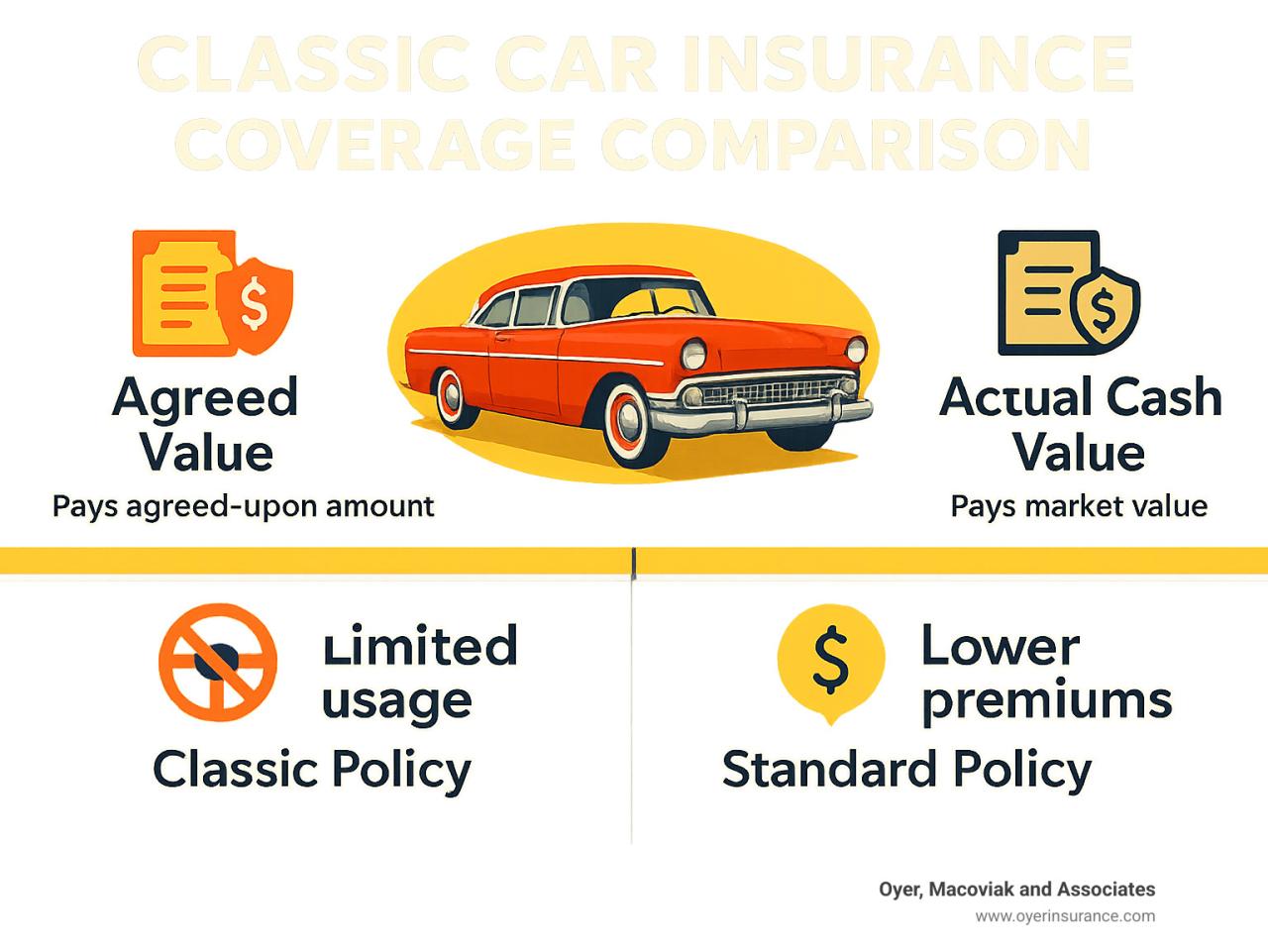
Classic car insurance is a specialized type of insurance designed to protect vintage and classic cars. These policies are tailored to the unique needs of classic car owners, providing coverage that regular car insurance may not offer.Classic car insurance differs from regular car insurance in several key ways.
While regular car insurance typically covers the actual cash value of a vehicle, classic car insurance offers agreed value coverage. This means that in the event of a total loss, the policyholder will receive a predetermined amount agreed upon when the policy was issued.
This is particularly beneficial for classic cars, as their value may appreciate over time.Some examples of classic cars that are typically covered under classic car insurance policies include iconic models such as the Ford Mustang, Chevrolet Corvette, Porsche 911, and Jaguar E-Type.
These cars are considered classics due to their age, rarity, historical significance, or collectible status.
Classic car insurance policies often include an option for agreed value coverage, which is a unique feature not typically found in standard auto insurance policies. Agreed value coverage is designed to protect classic car owners by ensuring that their vehicle is insured for a specific value that is agreed upon by the owner and the insurance company.
Agreed value coverage works by determining the value of the classic car at the time the policy is issued. This agreed value is based on factors such as the condition of the vehicle, its rarity, any customizations or modifications, and market value.
In the event of a total loss, the insurance company will pay out the agreed value amount, providing the owner with financial protection and peace of mind.
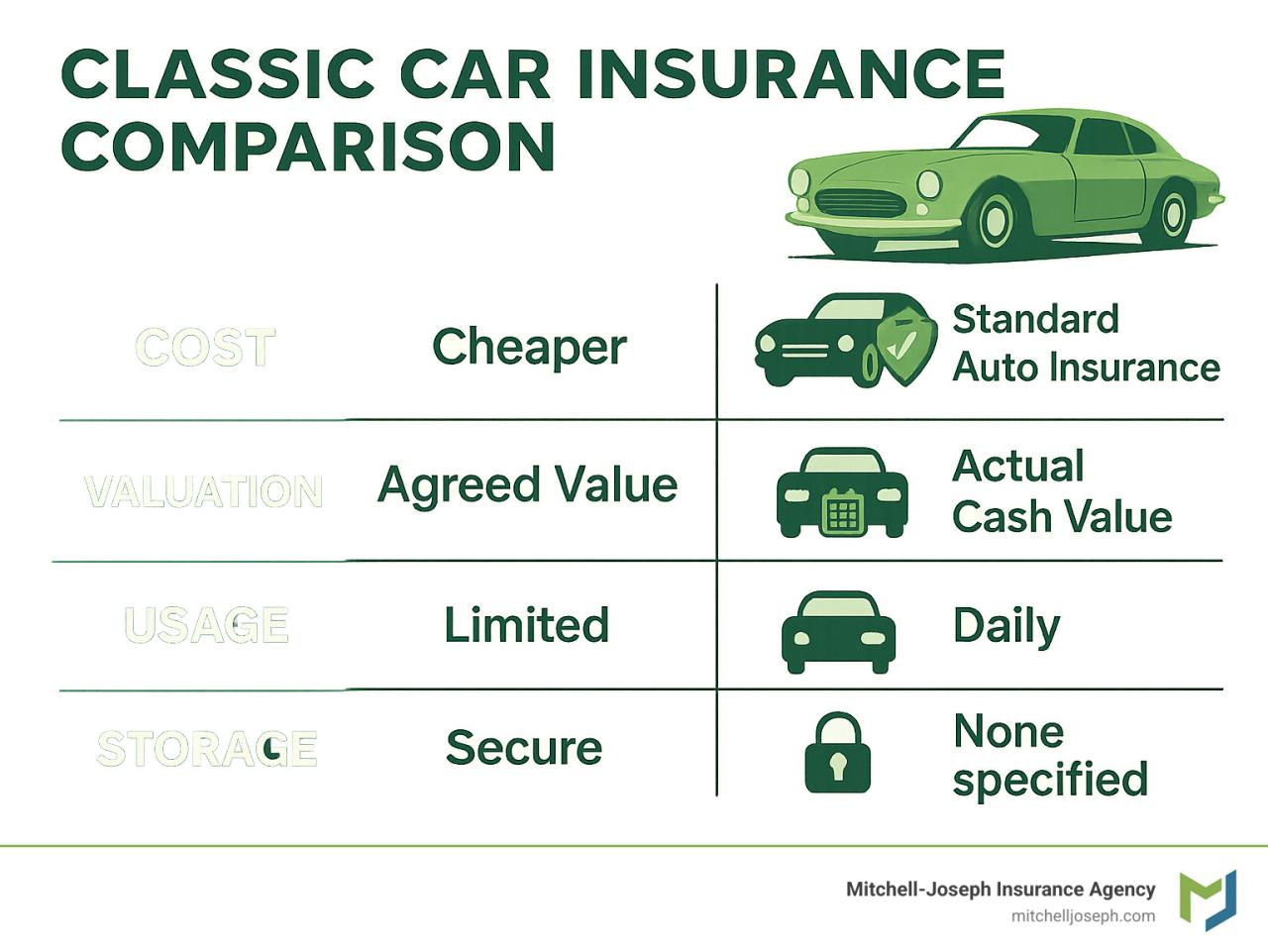
Classic car insurance policies typically come with specific coverage limits that define the maximum amount the insurance company will pay out in the event of a claim. These limits are crucial to understand to ensure your vintage vehicle is adequately protected.
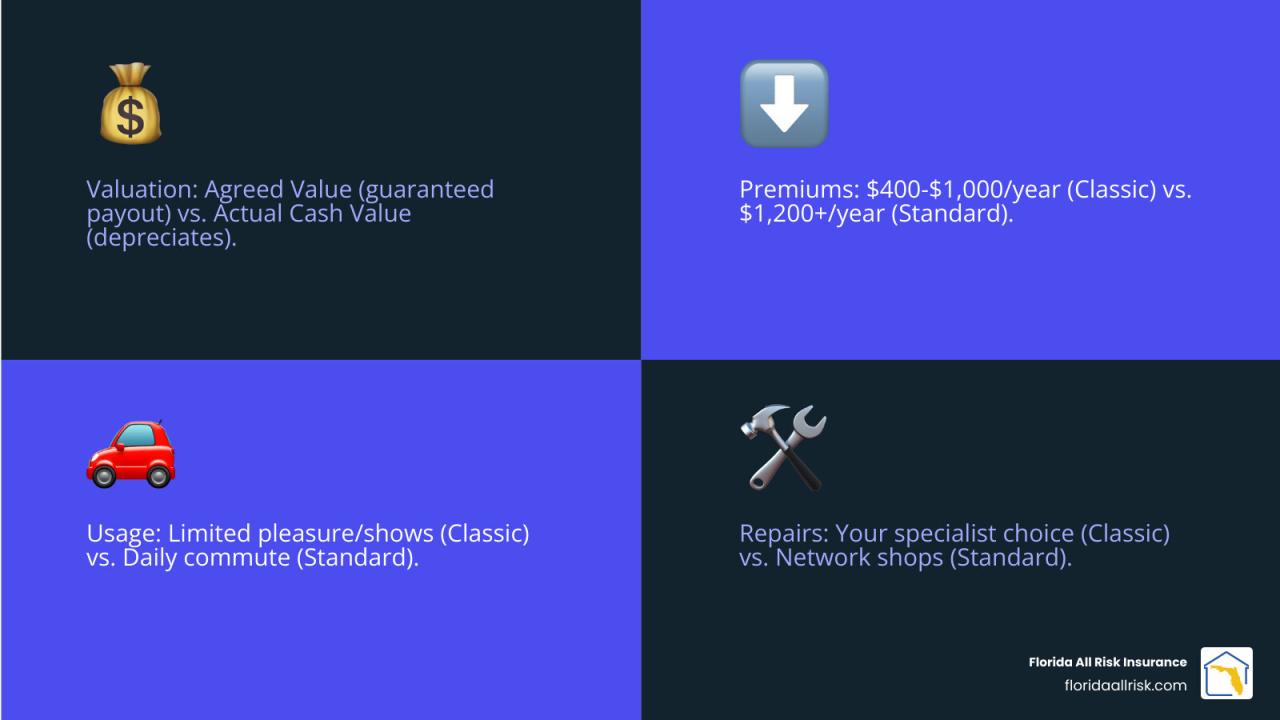
When it comes to classic car insurance, premium costs are determined based on several factors that assess the risk associated with insuring a vintage vehicle.
What is classic car insurance?
Classic car insurance is a specialized form of insurance designed to protect vintage and classic cars, providing coverage tailored to the specific needs and values of these unique vehicles.
How is agreed value coverage different from standard coverage?
Agreed value coverage in classic car insurance ensures that the car owner and the insurer agree on the vehicle’s value upfront, providing a predetermined amount in case of a total loss. This differs from standard coverage where the value is based on depreciation and market fluctuations.
What factors may influence coverage limits for classic cars?
Coverage limits for classic cars can be influenced by factors such as the car’s age, condition, rarity, and market value. Insurers may also consider the owner’s driving record and storage arrangements when determining coverage limits.
How are premium costs determined for classic car insurance?
Premium costs for classic car insurance are typically determined based on factors like the car’s value, age, model, usage patterns, and the owner’s driving history. Owners can potentially lower premiums by taking steps like installing security devices and maintaining a clean driving record.